

How to Choose the Right Business to Start: A Step-by-Step Selection Guide

Introduction
Choosing the right business to start means systematically matching your skills, resources, and risk tolerance with profitable market opportunities. Wrong business choices waste time and money—proper selection increases success odds significantly.
Many people dream of starting their own business, seeking more control over their professional and financial lives.
What This Guide Covers
Business evaluation criteria, self-assessment frameworks, and market analysis methods. NOT detailed startup procedures or industry-specific advice.
Who This Is For
Aspiring entrepreneurs, career changers, and side-hustle seekers ready to evaluate business options systematically rather than following gut instincts.
Why This Matters
Most new businesses fail: 20% close within the first year, and 50% don’t survive five years. Service-based businesses survive twice as often as product-based businesses. Experience matters—first-time founders succeed 18% of the time versus 30% for experienced business owners.
What You’ll Learn:
Skills and financial assessment techniques
Market validation methods
Business model comparison framework
Step-by-step decision process
Understanding Business Selection Fundamentals
Business selection is the systematic process of matching personal capabilities with market opportunities using data-driven analysis.
Gut feeling alone leads to poor decisions. Successful business selection requires alignment between your skills, financial capacity, and proven customer needs. A great idea for a product or service that stands out and directly addresses those needs is essential for success.
Self-Assessment Basics
Skills inventory: Technical abilities, industry knowledge, and transferable skills from your day job or specialized training. Being highly skilled in a particular subject area can make it easier to start a business or offer services that generate extra income, such as tutoring, translation, or photography.
Market Research Essentials
Target market identification: Specific customer segments with validated needs and willingness to pay for solutions, including understanding how to attract new customers through effective marketing and referral strategies.
Competition assessment: Direct competitors, market saturation levels, and pricing structures in local markets or online spaces.
Industry trends: Growth potential, regulatory changes, and technology impacts affecting your target audience.
Evaluating Business Opportunities
Apply your self-assessment knowledge to specific business models and market opportunities.
Skills and Experience Match
Match existing capabilities to business requirements. A graphic design business requires creative skills and software knowledge. A consulting business leverages professional experience in a particular field.
Identify skill gaps requiring additional training or partnership. Not everyone can immediately start specialized services like electrical work or become a personal trainer without proper certifications. Having the right know-how is essential for success in fields like marketing, home inspection, or starting a business.
Financial Requirements Analysis
Startup costs: Basic equipment, licensing, initial inventory, business bank account setup, and legal structure establishment. It's crucial to determine how much money you will need to cover these initial expenses and ensure you have enough capital to achieve your business goals.
Operating expenses: Physical location rent, utilities, insurance, reliable vehicle costs, and staff wages as your business grows.
Revenue projections: Realistic income streams based on target market size, pricing research, and capacity limits.
Market Viability Assessment
Validate customer demand through surveys, competitor analysis, and test sales. High demand doesn’t guarantee profitability—analyze overhead costs and pricing power.
Consider geographic factors: local services like lawn care and cleaning services versus scalable online businesses like social media management or content creation.

Step-by-Step Business Selection Process
Step-by-Step: Business Evaluation Framework
When to use: After completing self-assessment and initial market research, use this section as a step-by-step guide to evaluating business ideas.
Create business idea list: Generate 5-10 options matching your skills and interests
Apply SWOT analysis: Assess strengths, weaknesses, opportunities, and threats for each idea
Score financial viability: Calculate startup costs, break-even timeline, and profit potential
Validate top choices: Test demand through customer surveys or pilot sales
Make final decision: Choose based on highest combined score across all factors
Comparison: Service vs Product Business
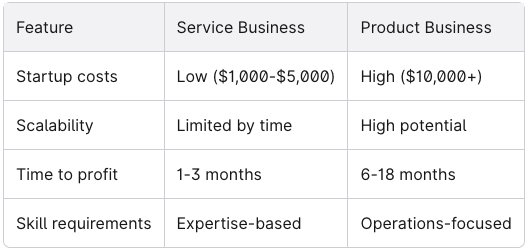
Service businesses like pet sitting, professional organizing, or music lessons offer faster cash flow but limited scalability without increasing your overall team size. Product businesses require more capital but can generate passive income streams once you scale out of the startup phase.
People prefer certain services, such as home-based childcare or specialized offerings, because of convenience or higher satisfaction compared to more generic or institutional options.
Developing a Business Model
Developing a business model is a foundational step in turning your business idea into a successful business. Your business model is essentially the blueprint for how your own business will operate, generate revenue, and deliver value to your target market. It outlines the path forward, helping you make informed decisions as your business grows and adapts to changing customer needs.
To start, identify your target audience and clarify what products or services you’ll offer to meet their needs. For example, a consulting business relies on your expertise in a particular field to provide solutions for other business owners, while a pet sitting business focuses on serving pet owners who need reliable care for their animals. Each business model requires a different approach to management structure, marketing, and customer service.
Consider the following key elements when developing your business model:
Value Proposition: What makes your business unique? Whether you’re launching an online store, a graphic design business, or a landscaping business, define how you’ll stand out in local markets or online spaces.
Revenue Streams: Determine how your business will make money. Will you charge per service, offer subscription packages, or sell products through an online store? For example, a social media management business might offer monthly retainers, while a food truck generates income through daily sales.
Cost Structure: Outline your startup costs and ongoing overhead costs, such as equipment, supplies, rent for a physical location, or the need for a reliable vehicle if you’re offering cleaning services or professional organizing.
Management Structure: Decide how your business will be managed. Will you operate solo, hire staff, or partner with others who have specialized training or business experience?
Customer Relationships: Plan how you’ll attract and retain potential customers. This could involve content marketing, building relationships through social media, or offering exceptional customer service.
Channels: Identify how you’ll reach your target market—through social media, local advertising, partnerships, or online platforms.
As you refine your business model, research your competition and analyze how other small business owners in your niche operate. Look for ways to differentiate your business, whether through pricing, unique services, or specialized expertise. For example, a professional organizer might target busy professionals, while a personal trainer could focus on clients seeking a flexible schedule.
Remember, there’s no single “perfect business” model. The right business model is one that aligns with your personal goals, leverages your skills, and meets the needs of your target market. As your business grows, be prepared to adjust your model—adding new income streams, expanding your customer base, or changing your management structure to support increased demand.
Take advantage of free tools and resources, such as business plan templates and online courses, to help you map out your business model. Seek advice from mentors or experienced business owners to avoid common pitfalls and gain valuable insights.
In summary, developing a business model is about more than just choosing a business idea—it’s about creating a sustainable, profitable business that delivers real value to your customers. By carefully considering your target market, revenue streams, cost structure, and management approach, you’ll set your business up for long-term success. Stay flexible, keep your goals in focus, and be ready to adapt as you learn what works best for your business and your customers.

Common Selection Mistakes and Solutions
Mistake 1: Following Passion Without Market Research
Solution: Validate passion-based ideas with customer surveys and competitor analysis. Great business ideas need paying customers, not just personal interest. For example, event catering is a great business idea for those passionate about culinary arts, as it meets market demand and can be profitable with the right preparation and permits.
Mistake 2: Underestimating Financial Requirements
Solution: Create detailed financial projections including 6-month emergency fund. Many profitable businesses fail due to cash flow problems during growth phases.
Mistake 3: Choosing Oversaturated Markets
Solution: Focus on niche markets or unique value propositions. A landscaping business targeting small commercial clients may succeed where general lawn care services struggle.
Conclusion and Next Steps
Systematic business selection using skills assessment, market validation, and financial planning dramatically improves success odds. The perfect small business idea balances your capabilities with proven market demand. You don't have to invent a new business model to find success.
To get started:
Complete skills and financial assessment using frameworks above
Research 3 potential markets matching your profile
Create detailed financial projections for top choices
Related Topics: Business plan development, customer validation techniques, and funding source evaluation for small business owners ready to launch their own business.